
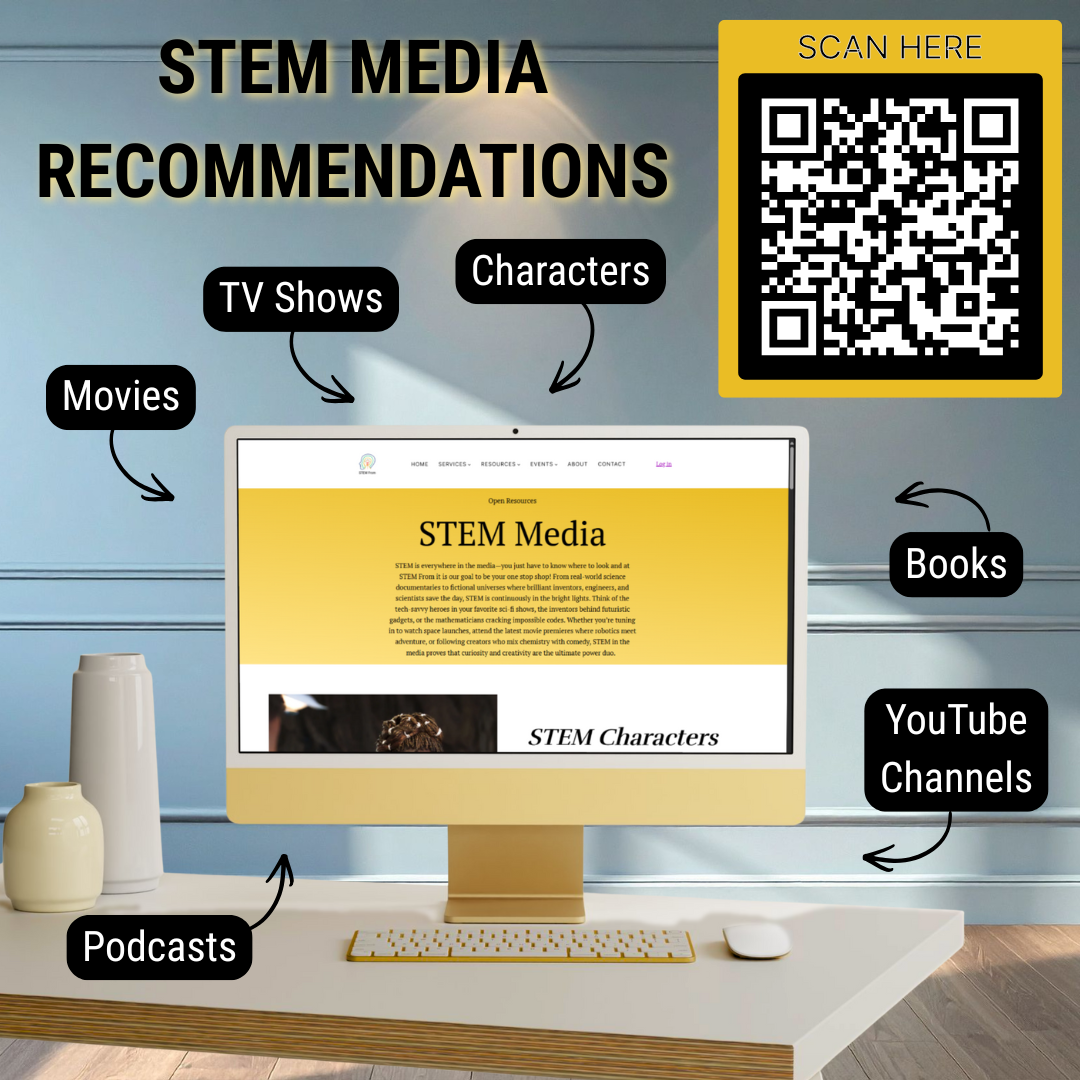
STEM in Media: Why the Stories We Watch Shape the Futures We Imagine
Movies, television shows, books, short videos (YouTube) and games are often this generation’s first introduction to STEM. The reality being that we watch shows and films long before we ever step into a lab, write code, or solve an equation. From space exploration epics to crime scene investigations, media plays a powerful role in shaping how we think about science, technology, engineering, and math. These stories don’t just entertain us; they enlighten our lives in what we would, should, and/or could do. They quietly (or not so quietly) influence what we believe STEM careers look like, who belongs in them, and what kinds of problems STEM professionals solve.
At STEM From, we believe stories and the journey along the way matters. As everyone of all ages make decisions which impact the rest of their lives, we want to be a part of those stories and that journey, wherever it may take you.
The Power (and Problem) of STEM in Media
Media does an incredible job of making STEM feel exciting, high-stakes, and important. It shows us scientists saving the world, engineers preventing disasters, and technologists solving impossible problems under pressure. These stories can spark curiosity, build inspiration, and help students imagine futures they may not have considered before.
But media can also simplify what STEM careers look like in reality and what it takes to accomplish those goals.
STEM in movies and TV is often portrayed as:
- The work of lone geniuses
- Full of instant breakthroughs and dramatic countdowns
- Experiments conducted in flashy, high-tech labs
- Fast-paced and action-driven sequences
- Perfectly accurate or catastrophically wrong
In reality, careers in STEM are far more human, collaborative, patient, and nuanced.
Why This Gap Matters for Students
When students only see STEM through the lens of entertainment, they can develop unrealistic expectations about:
- What the work actually involves
- What skills matter most
- What kinds of people belong in STEM
- How long learning and discovery really take
This is where guidance, reflection, and reframing become essential.
Some students may think, “I’m not a genius, so STEM isn’t for me.” Others may feel discouraged when learning feels slow or difficult, assuming they’re not succeeding or even failing when they’re actually doing exactly what real STEM professionals do every day.
Using STEM in Media as a Launching Pad for Success
At STEM From, we don’t believe media portrayals of STEM are bad or completely wrong. They are powerful means that students can use as an idea generator.
Stories can:
- Spark interest in new fields
- Introduce careers students didn’t know existed
- Make abstract ideas feel real and exciting
But students also need tools to:
- Separate fiction from reality
- Understand what careers actually involve on a day to day basis
- Reflect on their own strengths, interests, and tendencies
- Explore pathways that truly fit who they are
From Characters to Career Profiles
That’s where our work at STEMFrom.org comes in.
We use tools like career profiles, guided reflection, and storytelling to help students move from:
“That looks cool in a movie”
to
“Here’s what this kind of work is really like.”
Instead of asking students to pick a career based on a stereotype or a single story, we help them explore patterns in what they enjoy, what they’re good at, and what kind of impact they want to make.
Reclaiming the Narrative of STEM
STEM isn’t just for geniuses. It isn’t just for people who love pressure, speed, or spectacle. It’s for:
- Curious thinkers
- Careful planners
- Creative problem-solvers
- Patient builders
- Thoughtful communicators
The true inspiration though is that it happens everywhere
STEM can be found in every career and in every environment. It is not just in futuristic labs or dramatic crisis rooms as depicted in media.
The Real Goal: Helping Students See Themselves in the Future
STEM in media can open the door. But self-understanding is what helps students walk through it.
At STEM From, our mission is to help students:
- Understand themselves before choosing paths
- See more possibilities
- See even greater opportunities
- Build futures that are intentional, flexible, and meaningful
Choosing a career is less like following a map and more like writing a script: you start with an idea, revise constantly, and discover the ending along the way.
Leave a Reply