
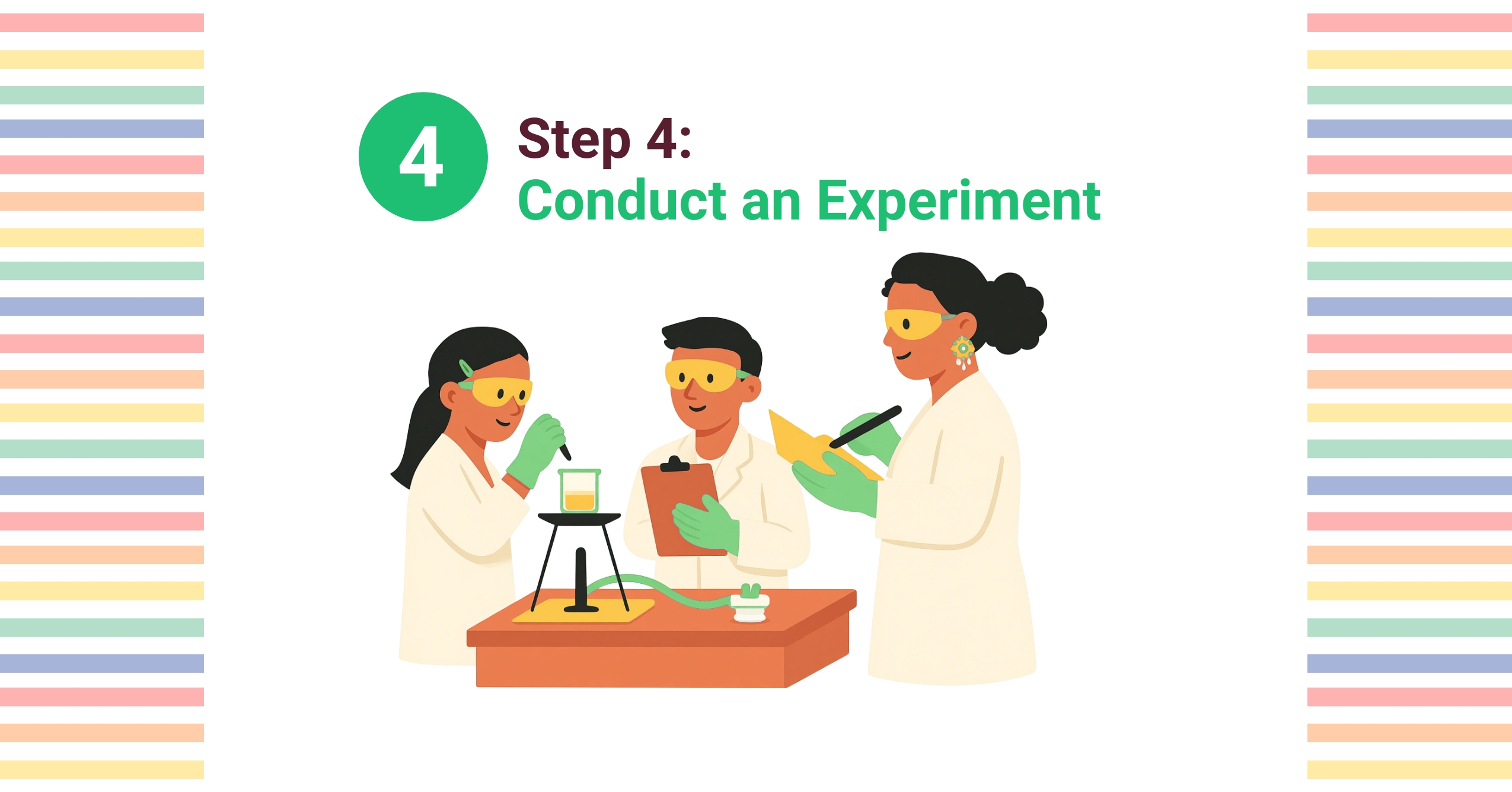
With a hypothesis in place, it’s time to put it to the test through experimentation. An experiment is a carefully planned procedure designed to determine whether the hypothesis is supported by evidence. To produce reliable results, scientists change only one independent variable at a time while keeping all other conditions as consistent as possible. They also measure the dependent variable—the outcome they are observing—and often include a control group for comparison. Careful planning, accurate measurements, and repeating trials help ensure that the results are valid and can be trusted.
Experiments are at the heart of scientific discovery because they transform ideas into measurable evidence. Whether testing a new medicine, evaluating a bridge design, developing cleaner energy sources, or improving computer algorithms, STEM professionals rely on well-designed experiments to answer important questions. Not every experiment produces the expected outcome, and that’s perfectly normal. Unexpected results often lead to new insights, better questions, and improved experiments. At STEM From, we encourage learners to view experimentation as an opportunity to explore, learn from mistakes, and develop the persistence and problem-solving skills that drive innovation.
Leave a Reply