
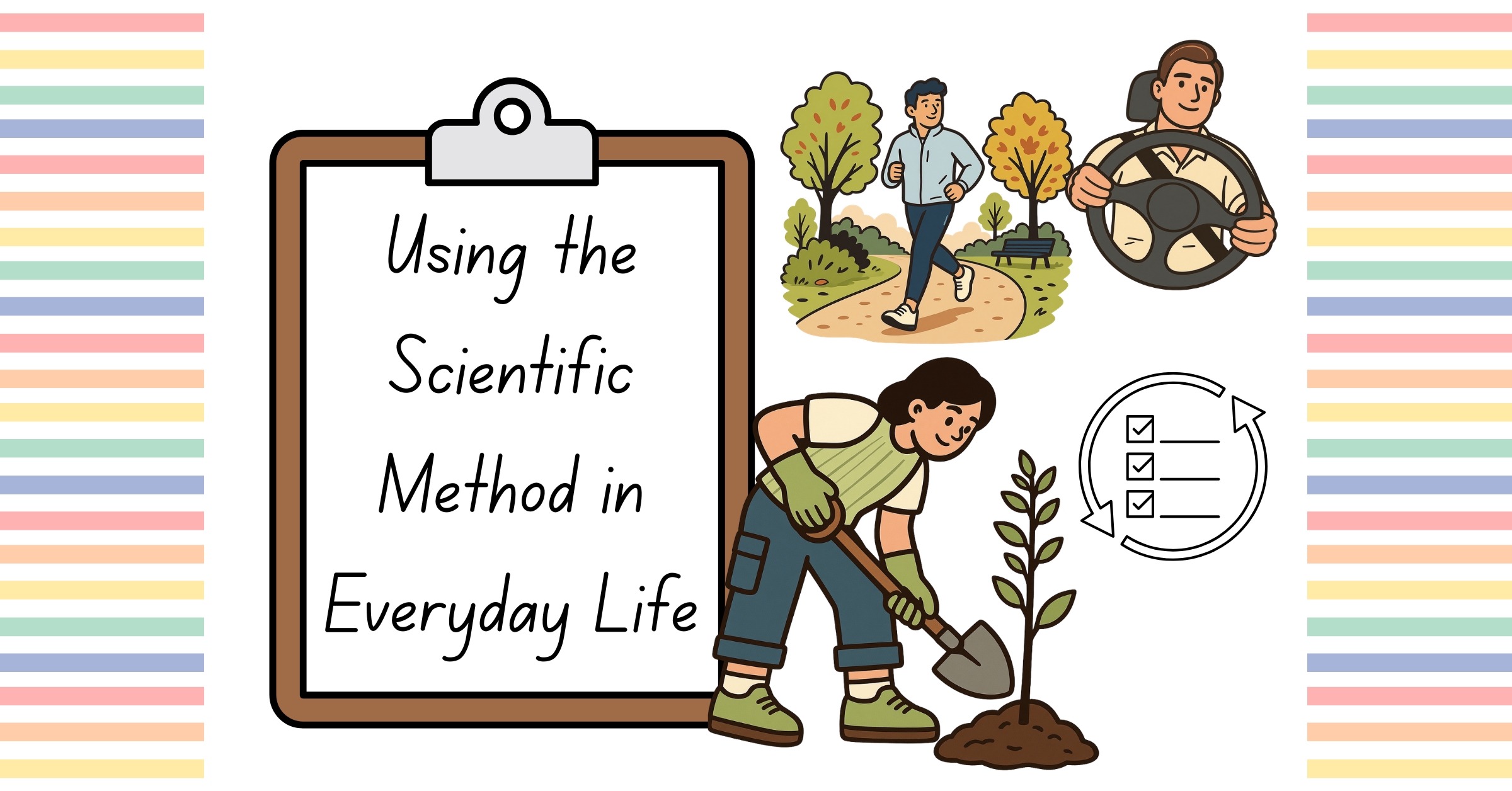
When most people hear the words scientific method, they picture researchers in white lab coats conducting experiments in a laboratory. In reality, the scientific method is something we all use—often without even realizing it. Every day, we encounter problems that require observation, critical thinking, and decision-making. Whether you’re trying to improve your morning routine, figure out why your car is making a strange noise, or decide which study strategy works best, the scientific method provides a practical framework for finding solutions based on evidence rather than guesswork.
It all begins with curiosity. You notice something and ask a question: Why am I always tired in the afternoon? Why aren’t my plants growing? Which route gets me to work the fastest? After asking the question, you gather information by researching possible explanations or observing patterns. Then, you make an educated prediction—or hypothesis—about what you think is happening. For example, you might predict that drinking more water during the day will improve your afternoon energy levels or that moving your plants to a sunnier window will help them grow.
Next comes the experiment. You test your idea by changing one factor at a time while keeping everything else as consistent as possible. If you’re trying to improve your sleep, you might stop using your phone an hour before bed for two weeks while keeping your bedtime the same. If you’re looking for a faster commute, you could try different routes over several mornings and record how long each one takes. By focusing on one change at a time, it’s much easier to determine what actually made the difference.
Finally, you analyze your results and draw a conclusion. Did your new bedtime routine help you feel more rested? Did the new commute save time? Did your plants begin to thrive after receiving more sunlight? If the results didn’t match your expectations, that’s okay. Just like scientists, you can revise your hypothesis, gather more information, and try another experiment. The goal isn’t to be right the first time—it’s to learn from the evidence and continue improving.
At STEM From, we believe the scientific method is more than a classroom exercise—it’s a lifelong problem-solving tool. It encourages curiosity, reduces the influence of assumptions, and helps people make thoughtful, evidence-based decisions. Whether you’re choosing a college major, learning a new skill, improving your health, managing your finances, or solving everyday challenges, thinking like a scientist can help you approach problems with confidence and creativity. The next time you face a question or obstacle, remember: observe, ask, test, learn, and try again. That’s the scientific method in action, and it’s a skill that can benefit everyone.
Leave a Reply