
Genre: Science Fiction | Adventure | Drama
Director: Phil Lord & Christopher Miller
Based on: Project Hail Mary by Andy Weir (2021)
Recommended Audience: High School (Grades 9+) through Adult
STEM Themes: Astrobiology, Physics, Chemistry, Astronomy, Engineering, Problem Solving, Collaboration, Scientific Inquiry
Movie Review
Few science fiction films celebrate science as enthusiastically as Project Hail Mary. Based on Andy Weir’s bestselling novel, the film follows Ryland Grace (Ryan Gosling), a former science teacher who awakens aboard a spacecraft with no memory of who he is or why he is there. As his memories slowly return, he discovers he has been sent on a seemingly impossible mission: save Earth from an organism threatening the Sun itself.
What begins as a survival story gradually transforms into one of the most heartwarming friendships in modern science fiction. Rather than relying on action or spectacle alone, Project Hail Mary succeeds because it makes scientific discovery exciting. Every challenge is solved through observation, experimentation, and creative thinking.
Ryan Gosling brings warmth, humor, and vulnerability to Ryland Grace, while the film’s visual effects beautifully capture the scale of deep space. Critics have praised the adaptation for preserving the optimism, humor, and emotional core of Andy Weir’s novel while making the story accessible to a wider audience.
The Science Behind the Story
One reason Project Hail Mary stands out is its commitment to scientific reasoning.
Although the central premise—a microorganism called astrophage that absorbs enormous amounts of stellar energy—is fictional, the film builds its science upon real principles of biology, chemistry, orbital mechanics, and astrophysics.
Throughout the story we see:
- Hypothesis formation
- Controlled experimentation
- Engineering design
- Data analysis
- Risk assessment
- Scientific collaboration
Rather than portraying science as magic, the movie demonstrates that breakthroughs often come through persistence, failure, and repeated testing.
Scientific Accuracy: What the Film Gets Right
Scientific Method: Nearly every major obstacle is solved through experimentation rather than guesswork. Grace continually develops hypotheses, tests them, observes results, and revises his understanding—exactly how scientific research works.
Engineering Problem Solving: The engineering challenges aboard the spacecraft feel authentic. Limited resources require creativity rather than convenient technological shortcuts.
Astrobiology: The concept of studying life that evolved under entirely different environmental conditions is speculative but grounded in legitimate questions scientists ask today. NASA and researchers studying extremophiles continue exploring what forms life might take elsewhere in the universe.
Teamwork: Perhaps the most realistic message is that scientific progress rarely happens alone. Even though Grace spends much of the film isolated, his greatest discoveries come through collaboration—a recurring theme throughout modern STEM careers.
Where the Science Becomes Fiction
Several scientific ideas stretch beyond current understanding. Astrophage itself remains entirely fictional. Interstellar travel at the speeds depicted remains beyond today’s engineering capabilities. Likewise, communication between species with vastly different biology would almost certainly be more difficult than portrayed. However, unlike many science fiction films, Project Hail Mary establishes clear scientific rules and remains remarkably consistent within those rules.
STEM Careers Featured
The film introduces viewers to careers including: Astrobiologist, Molecular Biologist, Physicist, Aerospace Engineer, Mechanical Engineer, Systems Engineer, Astronomer, Materials Scientist, Science Educator, and Mission Operations Specialist. One of the film’s strongest messages is that educators can become world-changing scientists—and scientists never stop being teachers.
Film vs. Book: How Does the Adaptation Compare?
Adapting Andy Weir’s highly detailed novel into a feature film was always going to require careful choices. Fortunately, Project Hail Mary remains one of the more faithful science fiction adaptations in recent years.
What the Film Preserves Well
The relationship between Grace and Rocky: The friendship between Ryland Grace and Rocky remains the emotional heart of both versions. Their growing trust, humor, and mutual respect translate beautifully to the screen and preserve what many readers loved most about the novel.
Scientific optimism: Both versions celebrate curiosity over conflict. Instead of focusing on warfare or destruction, they emphasize cooperation, discovery, and problem solving.
The central mystery: The gradual reconstruction of Grace’s memories remains effective in both formats, allowing audiences to uncover the mission alongside the protagonist.
What the Book Does Better
More Scientific Detail: Andy Weir devotes significantly more time to explaining the science behind astrophage, orbital mechanics, biology, and engineering. Readers who enjoy detailed scientific reasoning will find the novel even more rewarding.
Slower Character Development: The novel allows readers to spend much more time aboard the spacecraft. Grace and Rocky’s friendship develops gradually over months of experimentation, making their bond feel even deeper.
Richer World Building: The book provides greater insight into Earth’s response to the crisis, the international scientific effort, and the political challenges surrounding the mission.
What the Film Improves
Visual Storytelling: Seeing Rocky brought to life is one of the adaptation’s greatest achievements. The production design allows audiences to experience an alien civilization in ways impossible on the printed page.
Emotional Performances: Ryan Gosling adds warmth and humor to Ryland Grace, making him more emotionally expressive than his literary counterpart. Even Andy Weir has commented positively on the additional character depth Gosling brings to the role.
Accessibility: The movie streamlines many of the novel’s technical explanations, making the story easier for general audiences to follow without losing its scientific spirit.
Scientific Viability Score
| Category | Rating |
|---|---|
| Astronomy | ★★★★★ |
| Physics | ★★★★☆ |
| Engineering | ★★★★★ |
| Biology | ★★★★☆ |
| Astrobiology | ★★★☆☆ |
| Interstellar Travel | ★★☆☆☆ |
| Overall Scientific Plausibility | ★★★★☆ |
Final Thoughts
Project Hail Mary reminds us that science is ultimately a human endeavor. It isn’t about having all the answers—it’s about asking better questions, learning from failure, and working together to solve problems that once seemed impossible. Whether you experience the story through Andy Weir’s novel or the film adaptation, you’ll come away with the same inspiring message: curiosity, collaboration, and compassion may be humanity’s greatest strengths.
For STEM students, educators, and lifelong learners, Project Hail Mary is more than an entertaining science fiction adventure—it’s a celebration of scientific thinking and the extraordinary possibilities that emerge when knowledge and empathy meet.
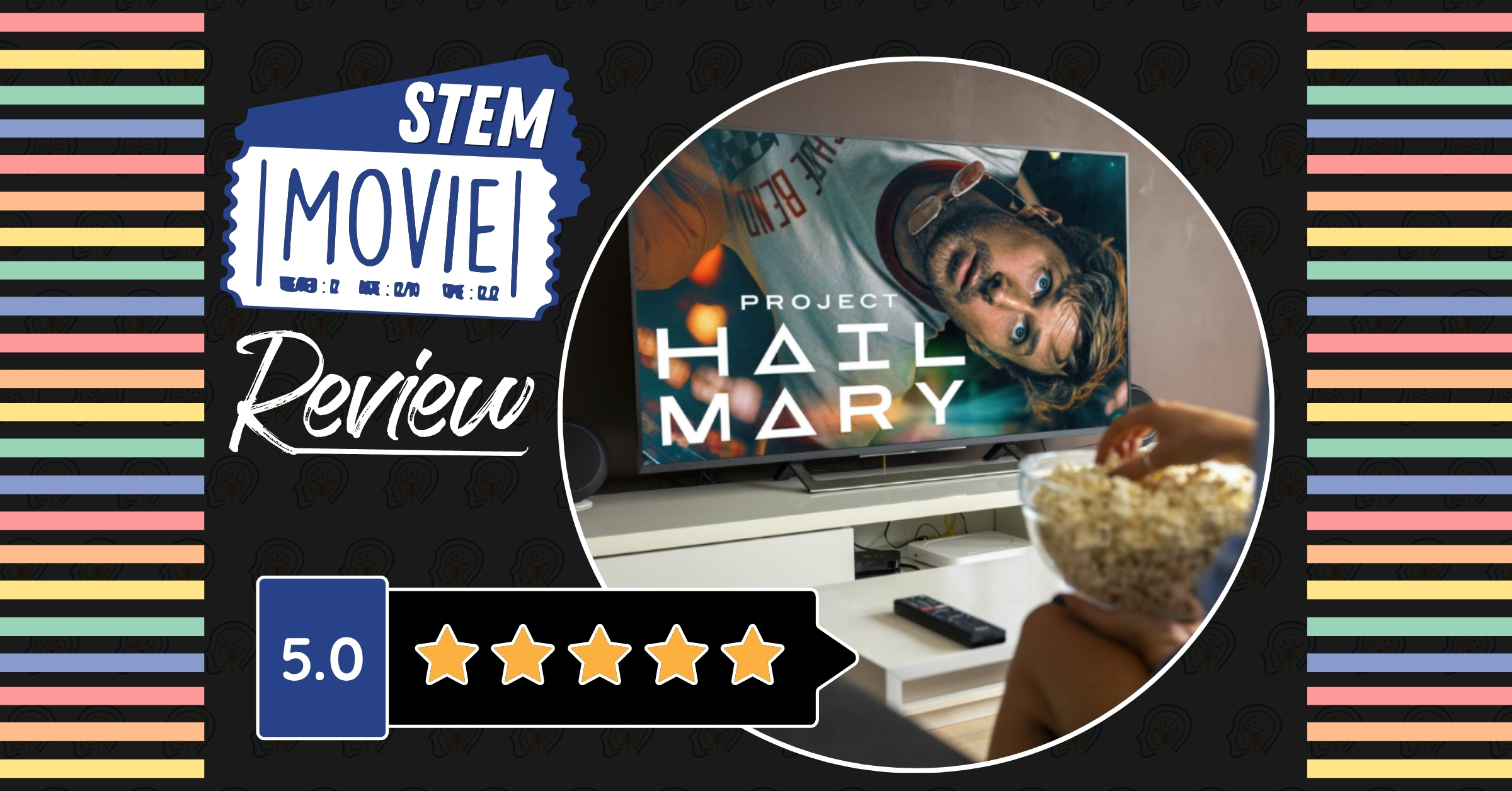
STEM From Rating: ★★★★★ (5/5)
Book vs. Film Verdict:
Read the book for the deeper science and richer technical detail. Watch the film for its emotional performances, breathtaking visuals, and faithful adaptation of the story’s heart. Together, they offer one of the finest modern examples of science fiction inspiring curiosity about the real world.
Leave a Reply